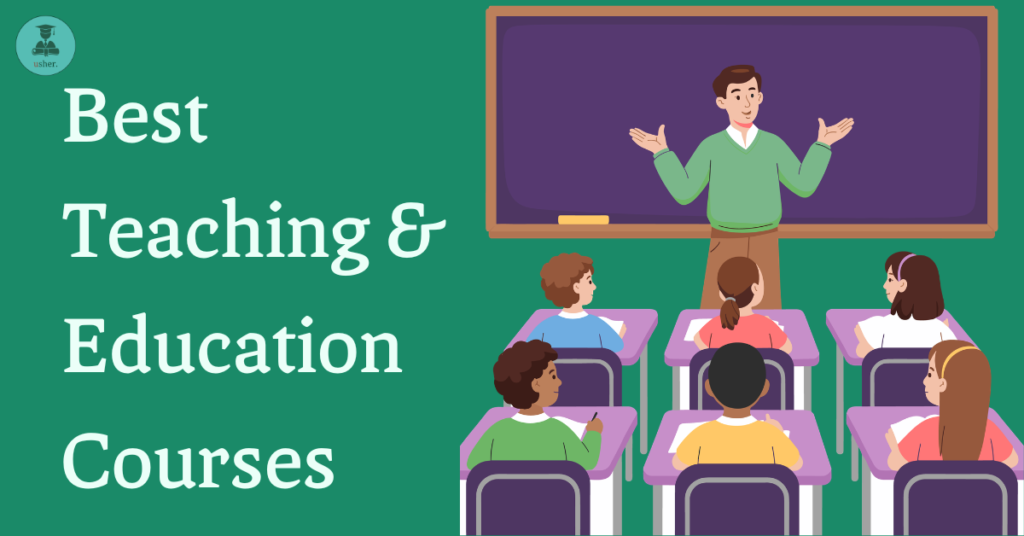
Best Teaching & Education Courses: How to Become a Teacher
A complete look at B.Ed, integrated teacher training and TET routes for Class 12 students, and how each one leads into government schools, private schools, higher education and the EdTech industry.
What's covered in this guide
What Is Teaching & Education After 12th?
Unlike the older image of teaching as simply delivering a syllabus, a modern teacher education programme blends subject expertise with child development theory, inclusive education practices and increasingly, digital teaching tools. Students study classroom management and assessment design alongside modules on learning disabilities and differentiated instruction, reflecting a broader shift toward personalised, outcome-focused teaching rather than uniform lecture delivery. Since teaching is fundamentally about communicating ideas clearly to others, it's worth building strong foundations early through resources like boosting your communication skills, since this is the single skill that separates effective teachers from merely knowledgeable ones.
Eligibility for the Integrated B.A/B.Sc B.Ed is Class 12 in the relevant stream, with admission through the National Common Entrance Test (NCET) being phased in under NEP 2020, alongside existing university-level entrance tests. The traditional 2-year B.Ed still requires a completed bachelor's degree first, making the integrated route significantly faster for students who know early that teaching is their chosen path.
Why Trained Teachers Are In Growing Demand
Three forces are driving this shift. First, UDISE+ data consistently shows significant teacher vacancies in government schools, particularly in rural areas, keeping structural demand high regardless of broader economic conditions. Second, private and international schools have expanded rapidly in urban India, competing for qualified teachers with better infrastructure and, increasingly, better pay than a generation ago. Third, EdTech companies need trained educators for content design, curriculum development and online teaching roles, a category of teaching job that barely existed before the last decade.
This has created a genuinely broad education job market that spans government schools, private and international schools, higher education, and EdTech content roles, rewarding graduates who combine strong subject knowledge with genuine pedagogical skill rather than treating a B.Ed as a formality. Building this skill well requires the same discipline described in developing a growth mindset, since good teaching itself depends on modelling that mindset for students.
Which Teaching Path Fits You?
| You want government job stability | Integrated B.Ed/B.Ed + CTET/State TET → Government School Teacher |
| You prefer working with younger children | D.El.Ed or Montessori/Early Childhood Training → Primary/Pre-Primary Teacher |
| You want to teach in private or international schools | B.Ed + Subject Specialisation → Private/International School Teacher |
| You're interested in children with learning differences | B.Ed Special Education → Special Educator |
| You want higher education/college teaching | Subject Master's + NET/SET → Assistant Professor |
| You're drawn to technology and content creation | B.Ed + EdTech/Instructional Design specialisation |
| You want school leadership careers eventually | B.Ed + M.Ed → Vice Principal/Principal track |
| You want to design curriculum and policy | M.Ed/M.A Education → Curriculum Designer/Education Researcher |
- Starting salaries, especially in private schools without strong brand recognition, are often modest, and meaningful pay growth typically takes 8-10 years and additional qualifications.
- Clearing CTET or a state TET is mandatory for most government teaching posts, and pass rates on these exams are lower than many students expect, requiring dedicated preparation beyond the B.Ed itself.
- Government teacher recruitment cycles can be slow and irregular, with some states going years between fresh vacancy notifications, creating real uncertainty for job-seeking graduates.
- Classroom management, especially in large government school classrooms, is genuinely demanding, and new teachers are rarely fully prepared for this reality by classroom-only training.
- Not every private B.Ed college delivers strong practical teaching exposure; many focus heavily on theory with limited real classroom practicum, so verify this before enrolling.
8 Best Teaching & Education Courses After 12th
Integrated B.A/B.Sc B.Ed (4-year, ITEP)
Combines a full bachelor's degree with teacher training in one streamlined 4-year programme.
B.Ed (2-year, post-graduation)
Standard teacher training pathway after completing any bachelor's degree.
D.El.Ed (Diploma in Elementary Education)
Focused training for teaching primary and upper-primary grade levels.
Montessori/Early Childhood Care & Education Diploma
Specialised training for pre-primary and early childhood teaching methods.
B.Ed Special Education
Training to teach children with learning disabilities and developmental differences.
M.Ed (Master of Education)
Leads to school leadership, teacher training and education research roles.
Subject Master's Degree + NET/SET
Required qualification path for assistant professor roles in colleges and universities.
B.Ed + EdTech/Instructional Design Certification
Adds curriculum design and digital content skills for EdTech industry roles.
Course Comparison Table
| Course | Duration | Entrance Route | Typical First Job | Avg. Fees/Year |
|---|---|---|---|---|
| Integrated B.A/B.Sc B.Ed | 4 years | NCET / University entrance test | School Teacher (post-TET) | ₹20,000-70,000 |
| B.Ed (2-year) | 2 years (post bachelor's) | State/University B.Ed entrance test | School Teacher (post-TET) | ₹20,000-80,000 |
| D.El.Ed | 2 years | State-level entrance test | Primary School Teacher | ₹15,000-50,000 |
| Montessori/ECCE Diploma | 1-2 years | Institute-level admission | Pre-Primary Teacher | ₹20,000-60,000 |
| M.Ed | 2 years (post B.Ed) | University entrance test | Teacher Trainer/Coordinator | ₹20,000-70,000 |
Skills You Actually Need, By Track
Classroom Teaching Track
Special/Inclusive Education Track
EdTech & Curriculum Track
Specialisation Deep Dive
Primary Teaching
Primary teachers work with foundational literacy, numeracy and early development, typically through D.El.Ed or the primary-stage component of integrated B.Ed programmes. This track offers the largest number of government vacancies nationally and is central to India's foundational literacy goals under NEP 2020.
Secondary/Subject Teaching
Secondary teachers specialise in a specific subject, Science, Mathematics, Social Studies or languages, typically through B.Ed with a subject specialisation. This track offers the clearest path into both government and well-resourced private school systems, with subject expertise mattering as much as pedagogical training.
Special Education
Special educators work with children with learning disabilities, autism spectrum conditions and other developmental differences, requiring specific training beyond a general B.Ed. This track has grown significantly as inclusive education policy has pushed mainstream schools to better support diverse learners.
Higher Education
College and university teaching requires a subject master's degree and clearing NET/SET, a distinctly different qualification path from school teaching. This track offers a research-linked career, often combining teaching with academic publication and eventually doctoral supervision.
EdTech & Curriculum Design
This track applies teaching expertise to digital content, online course design and curriculum development for EdTech companies and publishers. It offers a non-classroom career path for trained educators, often with better pay than early-career classroom teaching, though it trades direct student interaction for content-scale impact.
Government vs Private School: Salary Reality
Government School Track
Private/International School Track
Myths vs Reality
Teaching is a "backup" career for students who don't get into other fields.
Strong subject knowledge combined with genuine pedagogical skill is increasingly competitive to hire for, especially at top private and international schools.
Anyone with subject knowledge can teach well without formal training.
Classroom management, assessment design and understanding child development are learned skills that formal B.Ed training specifically builds.
Teaching only happens in a classroom.
EdTech content design, curriculum development and corporate training all draw on the same teaching qualifications and skills.
Government teaching jobs are impossible to get.
While competitive, UDISE+ data shows persistent nationwide teacher vacancies, particularly in rural and foundational-stage roles.
Teaching salaries never grow meaningfully.
Senior teachers, subject heads and school leadership roles, especially at well-funded private schools, can earn salaries comparable to many corporate careers.
A B.Ed is only useful for school teaching.
B.Ed graduates also work in corporate training, educational publishing, policy research and EdTech content roles.
Real Career Case Studies
From B.Ed to Government Secondary School Teacher
A B.Ed graduate cleared the state TET exam two years after graduating, joined a government secondary school as a science teacher, and after nine years now also mentors newer teachers at her school, earning close to ₹7 LPA with strong long-term job security.
From B.Ed Special Education to Inclusive Education Coordinator
A special education graduate joined a private school as a resource teacher supporting students with learning disabilities, and within five years now coordinates the school's entire inclusive education programme, earning close to ₹8 LPA.
From B.Ed to EdTech Curriculum Designer
A B.Ed graduate taught in a private school for four years, then transitioned into an EdTech company designing digital science curriculum, now working as a senior curriculum designer earning close to ₹10 LPA reaching students across the country.
Career Spotlight: 9 Education Sector Roles
Career Path Comparison Matrix
| Path | Entry Difficulty | Salary Growth | Job Stability | Best Suited For |
|---|---|---|---|---|
| Government School Teaching | High (TET + competitive exams) | Slow, structured | Very high | Stability-focused, patient students |
| Private/International School Teaching | Moderate | Moderate to fast | Moderate | Subject-strong, adaptable students |
| Higher Education (NET/SET route) | High (research + exams) | Slow, prestige-linked | High (post-permanent role) | Research-minded, academically driven students |
| EdTech/Curriculum Design | Moderate | Fast | Moderate | Tech-comfortable, content-oriented students |
Salary by Role
Top 8 Colleges for Teaching & Education
Regional Institutes of Education (RIEs), NCERT
NCERT's constituent teacher education institutes across Ajmer, Bhopal, Bhubaneswar and Mysore.
Visit site →Delhi University - Faculty of Education
Well-established, highly regarded teacher education programme in Delhi.
Visit site →Azim Premji University, Bengaluru
Widely respected for its education-focused programmes and strong pedagogical training.
Visit site →Tata Institute of Social Sciences (TISS), Mumbai
Strong M.A Education programme with a research and policy orientation.
Visit site →Jamia Millia Islamia, Delhi
Well-established Faculty of Education with strong practical training components.
Visit site →Banaras Hindu University - Faculty of Education
Long-established teacher training programme within a major central university.
Visit site →Lady Irwin College, Delhi
Reputed institute with strong early childhood and elementary education programmes.
Visit site →Christ University, Bengaluru
Popular private B.Ed and integrated teacher education programme.
Visit site →Tools & Software Used in Modern Teaching
| Tool / Software | Used For |
|---|---|
| Learning Management Systems (Google Classroom, Moodle) | Assignment distribution and online class management |
| Interactive whiteboard software | Digital classroom instruction and engagement |
| Video editing tools (basic) | Creating recorded lessons for EdTech or hybrid teaching |
| Assessment/quiz platforms | Digital testing and instant feedback tools |
| Student information systems | Attendance, grading and progress tracking |
| Presentation software (PowerPoint/Google Slides) | Lesson delivery and visual teaching aids |
Top Employers Hiring Teaching & Education Graduates
| Sector | Example Employers |
|---|---|
| Government Schools | State education departments, Kendriya Vidyalayas, Navodaya Vidyalayas |
| Private/International Schools | Delhi Public School network, other established private school chains |
| Higher Education | Colleges and universities hiring assistant professors post-NET/SET |
| EdTech | BYJU'S, Unacademy, Vedantu (content and curriculum roles) |
| Coaching/Test Prep | Established coaching institutes across subjects and exams |
- Classroom sizes in many government schools remain large, and managing genuinely diverse learning levels within one class is demanding work that formal training only partially prepares you for.
- Teaching carries significant emotional labour, and burnout is a real risk without deliberate boundaries, especially for teachers who take on informal counselling roles for struggling students.
- Administrative and paperwork demands (attendance, reporting, assessment documentation) have increased over time, taking time away from actual teaching and lesson preparation.
- Private school pay and job security vary enormously between institutions, and researching a specific school's reputation and financial stability matters as much as the job title on offer.
- Career progression into school leadership or higher-paying EdTech roles typically requires additional qualifications (M.Ed, specific certifications) beyond the base teaching degree, and planning for this early helps.
Application Checklist
- Decide between the 4-year integrated B.A/B.Sc B.Ed and the traditional bachelor's-then-B.Ed route based on how early you're certain about teaching
- Check the college's actual teaching practicum quality and school placement partnerships, not just brochure claims
- Understand CTET/state TET exam requirements early and begin structured preparation well before graduation
- Compare government vs private college fee structures and hidden costs
- Talk to at least one current student or practicing teacher before finalising your decision
- Build strong subject-matter depth alongside pedagogy, since subject knowledge weakness is a common reason new teachers struggle in the classroom
- Practice explaining concepts clearly to others early, using structured techniques like effective memorisation techniques adapted for teaching younger learners memorable, simplified explanations
Your 6-Stage Learning Path
| Stage | Focus | Timeline |
|---|---|---|
| 1. Entrance prep | NCET / university-level B.Ed entrance test preparation | Class 12, final year |
| 2. Foundation years | Core pedagogy, child psychology, subject knowledge building | Year 1-2 of programme |
| 3. Teaching practicum | Supervised classroom teaching practice in schools | Year 2-3 |
| 4. Specialisation | Focus on primary, secondary subject, special education or EdTech track | Year 3-4 |
| 5. TET/CTET preparation | Dedicated exam prep for government teaching eligibility | Final year / post-graduation |
| 6. Career entry | Government exam, private school placement, or EdTech/higher education route | Post-graduation |
Frequently Asked Questions
Yes, especially given persistent nationwide teacher shortages and the expansion of private schools and EdTech hiring. Starting salaries are modest, but stability in government roles and growing demand across the sector make it a genuinely solid long-term career for students with real interest in teaching.
The traditional B.Ed is a 2-year programme taken after completing any bachelor's degree, while the new Integrated B.A/B.Sc B.Ed under NEP 2020 combines both into one streamlined 4-year programme, saving roughly a year for students who know early that they want to teach.
CTET or a state-level TET is mandatory for teaching positions in central government schools and most state government schools. Many private schools also prefer or require it, even though it isn't always a strict legal requirement for private institutions.
Entry-level primary teachers typically earn ₹3-4 LPA, rising to ₹6-8 LPA for secondary teachers after 10 years, and ₹9-13 LPA for senior teachers or vice principals, with pay scales varying somewhat by state.
Yes. College and university teaching (assistant professor roles) requires a subject master's degree and clearing NET/SET, a completely separate qualification path from the B.Ed required for school teaching.
Special education trains teachers to work with students with learning disabilities and developmental differences. It's a growing, meaningful specialisation as inclusive education policy expands, though it requires patience and specific additional training beyond a general B.Ed.
Yes. B.Ed graduates increasingly work in EdTech content design, curriculum development, corporate training and educational publishing, roles that draw directly on teaching and pedagogical skills without a traditional classroom setting.
State education departments and Kendriya Vidyalayas hire through TET-based recruitment, established private school chains hire through direct interviews, and EdTech companies like BYJU'S, Unacademy and Vedantu regularly hire trained educators for content and teaching roles.
Not sure which stream fits you best?
Explore more career guides and study resources to plan your next step with confidence.