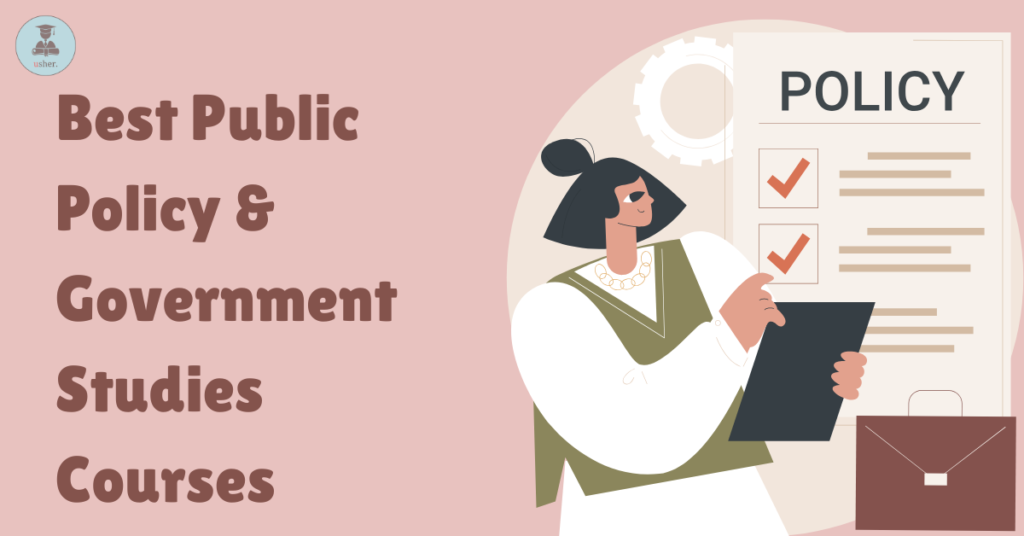
Best Public Policy & Government Studies Courses: Top Universities
A complete look at political science, public administration and public policy degrees for Class 12 students, and how each one leads into India's civil services, think tanks and governance sector.
What's covered in this guide
What Is Public Policy & Government Studies After 12th?
A modern public policy education blends political theory and constitutional studies with quantitative skills: budget analysis, programme evaluation and increasingly, data-driven policy research. Students study legislative processes and public finance alongside case studies of specific government schemes, reflecting how much more technical and evidence-based policy work has become compared to a generation ago. Because civil services preparation specifically demands years of sustained, structured study, it's worth building strong foundational habits early through effective study habits, since this discipline carries directly into UPSC or state PCS preparation later.
Eligibility for BA Political Science and BA Public Administration is Class 12 in any stream, with a minimum aggregate commonly around 45-50%. Admission runs through CUET for central universities or university-specific merit lists, while premier public policy schools and integrated law-and-policy programmes often require dedicated entrance exams, group discussions and personal interviews assessing analytical reasoning and current affairs awareness.
Why This Field Is Growing Right Now
Three forces are driving this shift. First, India's growing regulatory complexity, from data protection law to climate policy, needs specialists who understand both the legal and economic dimensions of governance. Second, dedicated public policy schools like Jindal School of Government and Public Policy have emerged specifically to train analysts for think tanks, government advisory roles and international development organisations. Third, legislative research bodies like PRS Legislative Research have professionalised how Parliament and state legislatures access independent policy analysis, creating a distinct research career track.
This has created a genuinely broad governance job market that spans civil services, think tanks, legislative research bodies and international development organisations, rewarding graduates who combine strong conceptual grounding in governance with rigorous analytical and writing skills rather than treating this field as a single-exam pursuit.
Which Governance Career Path Fits You?
| You want to serve as a government administrator | BA Political Science/Public Administration → UPSC/State PCS → Civil Services |
| You enjoy research and data-driven analysis | MPP → Policy Analyst at a think tank or research body |
| You're interested in how laws are drafted and reviewed | Political Science/Law + Legislative Research specialisation |
| You want international development careers | MPP/MA Development Studies → World Bank/UN/INGO roles |
| You're drawn to elections and political strategy | Political Science + Political Consulting/Campaign Management |
| You want corporate government-relations careers | Public Policy + Corporate Affairs/Government Relations specialisation |
| You want academic and research careers | BA/MA Political Science → M.Phil/PhD → Academic/Researcher |
| You want consulting-style policy advisory work | MPP + Economics/Finance specialisation → Policy Consultant |
- The UPSC Civil Services Exam has an extremely low success rate, well under 1% of applicants in most years, and treating a political science degree as automatic UPSC preparation without a realistic backup plan is a common, costly mistake.
- A standalone BA Political Science degree, without specific policy analysis, data or writing skills layered on top, doesn't automatically lead to well-paying think tank or research roles.
- Entry-level salaries at many think tanks and research organisations are modest compared to corporate roles, and pay growth depends heavily on publishing a strong body of research work over time.
- Government policy roles can be affected by political transitions and shifting institutional priorities in ways that private-sector careers generally are not.
- Dedicated public policy schools are still few in number relative to demand, and seats at the strongest programmes are genuinely competitive, requiring early, serious preparation.
8 Best Public Policy & Government Studies Courses After 12th
BA Political Science
Governance theory, constitutional law, comparative politics and political economy fundamentals.
BA Public Administration
Bureaucratic structures, public finance and administrative law, closely aligned with civil services preparation.
Master's in Public Policy (MPP)
Rigorous postgraduate training in policy analysis, economics and governance at dedicated schools.
BA LLB (Integrated) with Public Policy Electives
Combines legal training with policy and constitutional law specialisation.
MA Development Studies
Combines governance theory with international development and welfare economics.
BA Political Science/Public Administration + UPSC Foundation Course
Adds structured, exam-focused preparation alongside the core degree.
MA Political Science → M.Phil/PhD
Leads to academic, research institute and policy think tank careers.
PG Diploma in Public Policy Analysis
Shorter, skills-focused route into policy research and analysis roles.
Course Comparison Table
| Course | Duration | Entrance Route | Typical First Job | Avg. Fees/Year |
|---|---|---|---|---|
| BA Political Science | 3 years | CUET / University merit | Research Assistant | ₹10,000-40,000 |
| BA Public Administration | 3 years | CUET / University merit | Administrative Trainee | ₹10,000-40,000 |
| Master's in Public Policy (MPP) | 1-2 years (post UG) | Dedicated entrance test + interview | Policy Analyst | ₹4,00,000-9,00,000 |
| MA Development Studies | 2 years (post UG) | University entrance test | Development Research Associate | ₹40,000-1,50,000 |
| PG Diploma Public Policy Analysis | 1 year | Institute-level admission | Junior Policy Researcher | ₹1,00,000-3,00,000 |
Skills You Actually Need, By Track
Civil Services Track
Policy Research Track
Governance & Advocacy Track
Specialisation Deep Dive
Civil Services
Civil servants administer government policy at the district, state and national level through IAS, IPS, IFS and allied services, entered via the UPSC Civil Services Exam or state PCS exams. This remains the most prestigious and structurally stable track, though it requires years of dedicated exam preparation with no guaranteed outcome.
Policy Research
Policy researchers analyse government programmes, economic data and social indicators for think tanks and research organisations, producing evidence that shapes actual policy decisions. This track rewards strong quantitative and writing skills, typically built through an MPP or equivalent postgraduate training.
Legislative Research
Legislative researchers, notably at organisations like PRS Legislative Research, analyse bills and support Members of Parliament and state legislators with independent, non-partisan research. This is a smaller but highly specialised track offering direct visibility into how laws are actually made.
International Development
International development professionals work with organisations like the World Bank, UN agencies and international NGOs on governance, welfare and development programmes. This track often requires strong quantitative skills and, for many roles, international exposure or additional overseas study.
Government Relations
Government relations professionals work within corporations, helping businesses navigate regulation and policy, effectively applying public policy training to the private sector. This track typically pays more than pure research roles and has grown as regulatory complexity has increased across industries.
Civil Services vs Think Tank: Salary Reality
Civil Services Track
Think Tank / Policy Research Track
Myths vs Reality
A political science degree only prepares you for the UPSC exam.
Graduates also work in think tanks, legislative research, international development and corporate government relations.
You need to clear UPSC to have a meaningful governance career.
Policy research, legislative analysis and government relations roles offer meaningful, well-paying governance careers outside the exam route entirely.
Public policy work is purely theoretical, with no real-world impact.
Legislative researchers and think tank analysts routinely produce work that directly shapes actual bills and government programmes.
Think tank jobs don't pay well compared to the private sector.
Senior policy analysts and directors at established think tanks and consultancies can earn salaries competitive with many corporate roles.
Public administration and political science are basically the same degree.
Public administration focuses more on bureaucratic and administrative systems, while political science covers broader political theory and comparative governance.
This field has no real quantitative or technical component.
Modern public policy programmes increasingly require statistics, data analysis and economics alongside political theory.
Real Career Case Studies
From BA Political Science to IAS Officer
A political science graduate spent three years preparing for the UPSC Civil Services Exam alongside a research job, cleared it on her third attempt, and now serves as a sub-divisional magistrate, earning close to ₹11 LPA equivalent with significant administrative authority over her jurisdiction.
From MPP to Think Tank Policy Analyst
An MPP graduate joined a Delhi-based think tank as a junior policy analyst, published research on urban governance issues, and within five years now leads a small research vertical, earning close to ₹15 LPA.
From Political Science to Corporate Government Relations
A political science graduate joined a large company's government affairs team as an associate, and after six years now leads regulatory strategy for the company across multiple states, earning close to ₹20 LPA.
Career Spotlight: 9 Governance Sector Roles
Career Path Comparison Matrix
| Path | Entry Difficulty | Salary Growth | Job Stability | Best Suited For |
|---|---|---|---|---|
| Civil Services (UPSC/PCS) | Extremely high (very low selection rate) | Slow, structured | Very high | Highly disciplined, exam-resilient students |
| Policy Research/Think Tanks | Moderate to high | Fast with strong publications | Moderate | Analytical, research-driven students |
| Legislative Research | High (few specialised roles) | Moderate | Moderate to high | Detail-oriented, policy-curious students |
| Corporate Government Relations | Moderate | Fast | High | Business-minded, negotiation-comfortable students |
Salary by Role
Top 8 Universities for Public Policy & Government Studies
Jindal School of Government and Public Policy, Sonipat
One of India's leading dedicated public policy schools with strong faculty and industry ties.
Visit site →Lady Shri Ram College, Delhi University
Highly reputed political science undergraduate programme with strong academic rigor.
Visit site →Hindu College, Delhi University
Well-established political science department with a strong civil services preparation culture.
Visit site →St. Stephen's College, Delhi University
Prestigious institute with a long tradition of producing civil servants and policy professionals.
Visit site →TISS School of Public Policy and Governance, Mumbai
Strong public policy programme within India's premier social sciences institute.
Visit site →Ashoka University, Sonipat
Well-regarded liberal arts university with strong political science and economics programmes.
Visit site →National Law School of India University, Bengaluru
Premier law school offering strong public policy and constitutional law programmes.
Visit site →Indian Institute of Management (IIM) Public Policy Programmes
Several IIMs now offer dedicated public policy management programmes for working and early-career professionals.
Visit site →Tools & Frameworks Used in Public Policy Work
| Tool / Framework | Used For |
|---|---|
| Excel / Stata / R | Policy data analysis and programme evaluation |
| Cost-benefit and impact evaluation frameworks | Assessing government scheme effectiveness |
| Bill tracking and legislative databases | Legislative research and analysis |
| Budget analysis tools | Public finance and fiscal policy review |
| GIS/mapping tools | Spatial analysis of welfare scheme coverage |
| Policy brief and memo writing frameworks | Communicating research to non-specialist decision-makers |
Top Employers Hiring Public Policy Graduates
| Sector | Example Employers |
|---|---|
| Government | Central and state government departments, NITI Aayog |
| Think Tanks/Research | PRS Legislative Research, Centre for Policy Research, Observer Research Foundation |
| International Organisations | World Bank, UN agencies, international development bodies |
| Corporate Government Relations | In-house policy/regulatory affairs teams at large corporates |
| Consulting | Policy practices at major consulting firms |
- Civil services preparation often consumes several years of a candidate's twenties, and building a realistic backup career plan alongside exam preparation matters more than most aspirants initially admit.
- Government transfers and postings, especially early in a civil services career, can be unpredictable and require significant personal flexibility around location.
- Think tank funding, like NGO funding, can be project or grant dependent, creating some income and job security variability compared to government or large corporate roles.
- Policy work often moves slower than expected; meaningful legislative or programme change can take years, requiring patience that not every graduate anticipates.
- Navigating institutional bureaucracy, whether in government or large research organisations, is a real, ongoing part of the job that formal education only partially prepares graduates for.
Application Checklist
- Build a realistic career plan that doesn't depend entirely on clearing the UPSC exam on a specific attempt
- Research whether a dedicated MPP programme fits your goals better than a standalone political science degree
- Understand each target university's entrance process, whether CUET, a dedicated test, or interview-based admission
- Compare government vs private college fee structures, since dedicated public policy schools can be significantly more expensive
- Talk to at least one current student or working policy professional before finalising your decision
- Start reading current affairs and government reports seriously from Class 12 itself, since this habit compounds over years
- Build strong writing and argumentation skills early using resources like boosting your communication skills, since policy work depends entirely on communicating complex ideas clearly
Your 6-Stage Learning Path
| Stage | Focus | Timeline |
|---|---|---|
| 1. Entrance prep | CUET / university-specific entrance test preparation | Class 12, final year |
| 2. Foundation years | Core political theory, governance, constitutional law | Year 1-2 of degree |
| 3. Internships | Think tank, NGO or government department internship exposure | Year 2-3 |
| 4. Specialisation decision | Choose civil services, research, or corporate track | Year 3 |
| 5. Advanced study/prep | MPP, UPSC/PCS preparation, or direct job applications | Final year / post-graduation |
| 6. Career entry | Civil services exam, think tank hiring, or corporate/consulting roles | Post-graduation onward |
Frequently Asked Questions
Yes, particularly for students genuinely interested in governance and social systems. It offers meaningful paths through civil services, think tanks, legislative research and corporate government relations, though it's important not to treat the UPSC exam as the only viable outcome.
No. Policy research, legislative analysis, international development and corporate government relations all offer meaningful, well-paying careers in governance without requiring the UPSC exam at all.
Political science covers broader political theory, comparative politics and governance systems, while public administration focuses more specifically on bureaucratic structures, administrative law and how government departments actually function.
Entry-level policy analysts, typically with an MPP, earn ₹6-9 LPA, rising to ₹12-18 LPA for senior analysts after 5 years, and ₹22-30 LPA for policy directors or principal consultants at established think tanks and consultancies.
For students aiming at think tank, international development or policy consulting careers, yes, an MPP significantly improves access to these roles and starting salaries compared to a standalone bachelor's degree alone.
The UPSC Civil Services Exam has a very low success rate, typically well under 1% of applicants in a given year, which is why building a realistic backup career plan alongside preparation is strongly advisable.
Yes. Corporate government relations and regulatory affairs roles are a growing, well-paying private-sector career path that directly applies public policy training to help businesses navigate regulation and policy change.
Think tanks like PRS Legislative Research, Centre for Policy Research and Observer Research Foundation, government bodies like NITI Aayog, and international organisations like the World Bank and UN agencies regularly hire public policy graduates for research and analyst roles.
Not sure which stream fits you best?
Explore more career guides and study resources to plan your next step with confidence.