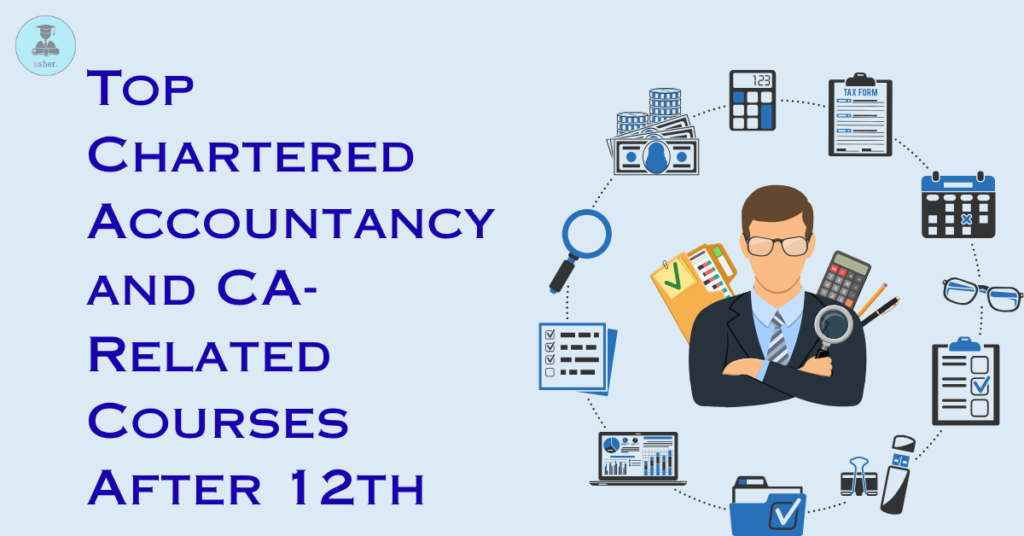
Top Chartered Accountancy and CA-Related Courses After 12th
A complete, honest breakdown of CA, CMA, CS, ACCA, CPA and every other commerce qualification worth considering after Class 12 - what each one actually pays, and how long it really takes.
What This Guide Covers
What Is CA? Understanding the Qualification After 12th
Students can register for CA Foundation directly after Class 12 from any stream, though commerce students with accounting exposure typically find the transition smoother. The path is exam-driven rather than attendance-driven, which means self-discipline matters more here than in almost any other career track covered in this guide.
Students who build effective study habits early tend to survive the multi-year CA timeline with far less burnout than those who start studying only when exams approach.
Which Qualification Fits You?
- CA Final pass rates hover around 10 to 20 percent per attempt - most students need more than one attempt at some level.
- Articleship means two years of long hours at client sites for a modest stipend, well before you are earning a full salary.
- Family and peer pressure to choose CA over CMA or CS leads many students into a path that does not actually fit how they think.
- A CA qualification alone, without Excel, SAP or data skills, is a weaker candidate today than one paired with practical tools.
- The full CA timeline realistically runs four to five years - students expecting a two-year fast track are consistently disappointed.
Top 8 CA and Commerce Qualifications to Consider
Chartered Accountancy (CA)
The gold standard in Indian accounting - Foundation, Intermediate, Articleship and Final, leading to audit, tax and CFO-track careers.
Cost and Management Accountancy (CMA)
Focused on cost control, budgeting and manufacturing finance - core to factory and production-heavy industries.
Company Secretary (CS)
Corporate law, governance and compliance - the qualification every listed company legally needs on its board.
ACCA (UK)
A globally recognised qualification popular with students eyeing multinational firms or careers abroad.
CPA (US)
The US equivalent of CA, valuable for students targeting American MNCs, Big 4 US desks or US-based clients.
BCom (Honours)
The most common foundation degree for commerce students, and a common parallel track while pursuing CA or CS.
BBA Finance and Accounting
A more applied, less exam-heavy alternative that still opens doors into banking, finance and analyst roles.
Diploma in Taxation Laws
A shorter, focused route into tax practice for students who want a faster, narrower specialisation.
Students often develop a growth mindset while balancing a degree alongside these professional exams, since the workload compounds fast once Intermediate-level papers begin.
Qualification Comparison: Duration, Body and Focus
| Qualification | Governing Body | Typical Duration | Core Focus |
|---|---|---|---|
| Chartered Accountancy (CA) | ICAI | 4-5 years | Audit, taxation, financial reporting |
| Cost and Management Accountancy (CMA) | ICMAI | 3-4 years | Cost control, budgeting, manufacturing finance |
| Company Secretary (CS) | ICSI | 3-4 years | Corporate law, governance, compliance |
| ACCA (UK) | ACCA Global | 3-4 years | International accounting and audit standards |
| CPA (US) | AICPA | 1-2 years post-degree | US GAAP accounting and audit |
| BCom (Honours) | University | 3 years | General commerce and accounting foundation |
| BBA Finance and Accounting | University | 3 years | Applied finance and business fundamentals |
| Diploma in Taxation Laws | University/Institute | 1 year | Direct and indirect tax practice |
The CA Career Staircase: Foundation to Membership
Building steady habits across this staircase connects directly to how students manage your time as a student, since the CA timeline punishes anyone who tries to cram at the last stage.
Inside the Four Major Specialisations
Covers statutory audit, direct and indirect taxation, and financial reporting. Feeds into Big 4 firms, mid-size CA practices, and eventually CFO-track roles inside large companies.
Covers cost accounting, budgeting and operational efficiency, especially in manufacturing and FMCG. Feeds into cost accountant, plant finance and operations-finance roles at production-heavy companies.
Covers company law, board governance and regulatory filings. Feeds into company secretary roles at listed companies, where the position is a legal requirement, not optional.
Covers international accounting standards (IFRS or US GAAP). Feeds into multinational firms, Big 4 global delivery centres and roles requiring cross-border client work or eventual relocation.
Practice vs Industry: Which Pays Better?
Independent Practice
Newly qualified CAs starting their own practice or joining a small firm often earn less than salaried peers in year one, roughly Rs 4-7 LPA equivalent, but income scales with client base and can significantly outpace corporate salaries within five to seven years.
Corporate / Industry Role
CAs, CMAs and CS professionals joining Big 4 firms, MNCs or large Indian conglomerates typically start at Rs 7-14 LPA, with structured annual raises and a clearer path toward senior finance and CFO-track roles.
Commerce Career Myths vs Reality
Real Stories: Where These Qualifications Actually Led
Current package: Rs 9.5 LPA
"Articleship years were brutal, but they are the reason I could walk into a Big 4 audit floor without feeling lost on day one."
Current package: Rs 6.8 LPA
"Everyone pushed me toward CA. CMA fit how my brain works - I like breaking down what things actually cost, not just auditing them."
Current package: Rs 7.2 LPA
"People assume CS is a backup for people who could not clear CA. My work sits at board meetings most CAs never get near."
Career Spotlight: 9 Paths a Commerce Graduate Can Take
Practicing Chartered Accountant
Runs an independent practice or partners in a CA firm, handling audit, tax and advisory work for clients.
Internal Auditor
Reviews a company's financial controls and processes from within, flagging risk before external auditors do.
Tax Consultant
Advises individuals and businesses on direct and indirect tax planning, filings and compliance.
Finance Manager / CFO Track
Moves up through corporate finance into budgeting, forecasting and eventually CFO-level decision-making.
Forensic Accountant
Investigates financial fraud, embezzlement and irregularities for law firms, companies and investigators.
Cost Accountant
Analyses production costs and efficiency, central to manufacturing and FMCG companies.
Company Secretary
Ensures legal and regulatory compliance for a company's board, filings and corporate governance.
Investment Banking Analyst
Uses accounting fundamentals to build financial models, valuations and deal analysis at banks and boutiques.
Financial Analyst
Interprets financial statements and market data to guide investment and business decisions.
Students weighing these options benefit from work on plan your career in high school, since interviews for finance and consulting roles lean heavily on how clearly you can explain numbers to a non-technical audience.
Choosing Your Path: Qualification Comparison Matrix
| Path | Best For | Entry Difficulty | Career Ceiling |
|---|---|---|---|
| Chartered Accountancy Practice | Students wanting audit, tax and Big 4 careers | Very high - low pass rates | Very high, including CFO roles |
| Industry Finance Role | BCom, BBA and qualified professionals | Moderate | High with experience and an MBA |
| Corporate Governance (CS) | Students interested in law and compliance | High | High, especially at listed companies |
| Cost Management (CMA) | Students interested in manufacturing and operations | High | High in production-heavy industries |
| International Qualification (ACCA/CPA) | Students targeting MNCs or relocation abroad | High | Very high in global firms |
What Commerce Professionals Actually Earn
Top 8 Feeder Colleges for Commerce and CA Aspirants
Tools and Software Every Commerce Student Should Know
| Tool | Used For | Relevant Tracks |
|---|---|---|
| Tally | Accounting and bookkeeping | CA, CMA, BCom |
| SAP | Enterprise resource planning | CA, CMA, corporate finance roles |
| Excel / Power BI | Financial modelling and reporting | All commerce and finance tracks |
| QuickBooks | Small business accounting | CA practice, BCom, BBA |
| Zoho Books | Cloud accounting | CA practice, small firm accounting |
| ClearTax | GST and income tax filing | CA, tax consultants, Diploma in Taxation |
| Winman / Genius | Tax computation and e-filing | CA, tax practice |
| MCA21 / XBRL Tools | Regulatory filings | Company Secretary, compliance roles |
Who Hires CA, CMA and CS Professionals?
| Employer | Sector | Who They Hire |
|---|---|---|
| Deloitte, EY, KPMG, PwC (Big 4) | Audit and Consulting | CA, ACCA, CPA graduates |
| Grant Thornton, RSM | Audit and Advisory | CA, CMA graduates |
| Tata Group | Conglomerate - Finance | CA, CMA, CS graduates |
| Reliance Industries | Conglomerate - Finance and Compliance | CA, CS graduates |
| HDFC Bank, ICICI Bank | Banking and Finance | CA, BBA Finance graduates |
| Government PSU Finance Departments | Public Sector | CA, CMA graduates via exams |
| Investment Banks and Boutiques | Investment Banking | CA, BBA Finance, CFA-track graduates |
| Law Firms and Corporate Legal Teams | Legal and Compliance | CS graduates |
- Big 4 recruitment is genuinely competitive - a CA rank alone does not guarantee an offer without interview preparation.
- Students who choose their articleship firm carelessly often end up with weak, narrow exposure that hurts them at the final interview stage.
- CMA and CS professionals face a smaller but more specific employer pool - fewer companies hire, but demand per opening is often less crowded than CA.
- A degree alone, without CA, CMA or CS, is a genuinely harder sell for finance-heavy roles at large companies compared to smaller firms.
- Tier-2 and tier-3 city students often need to actively seek remote or relocatable roles, since Big 4 offices concentrate in metro cities.
This is exactly where students use memorization techniques that actually work - strong recall of accounting standards and case law genuinely separates candidates in CA and CS interviews.
Your Checklist Before Choosing a Commerce Path
- Decide between CA, CMA and CS based on the decision tool above, not on which one your friends are attempting
- Register for the Foundation level of your chosen body right after Class 12 to avoid losing time
- Enrol in a BCom or BBA program alongside your professional exams as a fallback qualification
- Research articleship or practical-training firms early - the firm you train at shapes your first job significantly
- Build Excel and Tally familiarity before your Intermediate level, not after
- Set a realistic multi-year timeline and expect at least one exam attempt to not go as planned
The 6-Stage Learning Path From Class 12 to Qualified Professional
| Stage | Focus | What To Do |
|---|---|---|
| Stage 1 | Class 12 (Commerce Stream) | Register for CA Foundation, CS Executive Entrance or CMA Foundation right after Class 12; commerce with maths is preferred but not mandatory. |
| Stage 2 | Foundation Level | Clear the entry-level exam for your chosen body (CA Foundation, CMA Foundation, CS Executive) while optionally enrolling in a BCom program. |
| Stage 3 | Intermediate Level | Move to the intermediate stage of your qualification; this is where the syllabus gets significantly harder and requires disciplined study. |
| Stage 4 | Articleship / Practical Training | CA and CMA students complete mandatory practical training (articleship) at a firm, which is where most real-world skill is built. |
| Stage 5 | Final Level | Clear the final exams of your chosen body - this is the most demanding stage and determines when you can call yourself qualified. |
| Stage 6 | Membership and Specialisation | Register as a member with ICAI, ICMAI or ICSI, then choose between practice, industry roles or further specialisation. |
Students who succeed in campus placements throughout this journey tend to handle the high-pressure Intermediate and Final exam stretches with far less burnout.
Frequently Asked Questions
It typically takes four to five years after Class 12 to become a Chartered Accountant, covering CA Foundation, Intermediate, a mandatory two-year articleship, and the CA Final exams, assuming exams are cleared without repeated attempts.
CA (Chartered Accountancy) focuses on audit, taxation and financial reporting under ICAI. CMA (Cost and Management Accountancy) focuses on cost control and budgeting under ICMAI. CS (Company Secretary) focuses on corporate law, governance and compliance under ICSI. All three are professional qualifications with distinct career tracks.
Yes. Students from any stream - science, arts or commerce - can register for CA Foundation after Class 12, though commerce students often find the initial accounting and law syllabus more familiar.
Not necessarily better, but different. CA is more deeply recognised for domestic Indian audit, tax and compliance work, while ACCA is often preferred by multinational firms and for careers involving international clients or relocation abroad.
Articleship stipends vary by firm size and city, generally ranging from a few thousand rupees per month at smaller firms to significantly higher amounts at Big 4 and large firms, alongside the practical training itself.
It is not mandatory, but most CA students do complete a BCom degree alongside their Foundation and Intermediate levels, since it provides a fallback qualification and complements the CA syllabus.
CA generally commands a higher average starting salary in India due to broader recognition in audit and Big 4 firms, but CMA professionals in manufacturing and cost-heavy industries can earn comparably well, especially in senior cost-management roles.
Difficulty is not directly comparable across fields. CA has a notoriously low pass percentage at each level, but the challenge is more about consistent long-term discipline across a multi-year exam structure than about a single high-difficulty entrance test.
Want Help Choosing Between CA, CMA and CS?
Compare more commerce and finance career paths on Usher before you commit to a professional body.